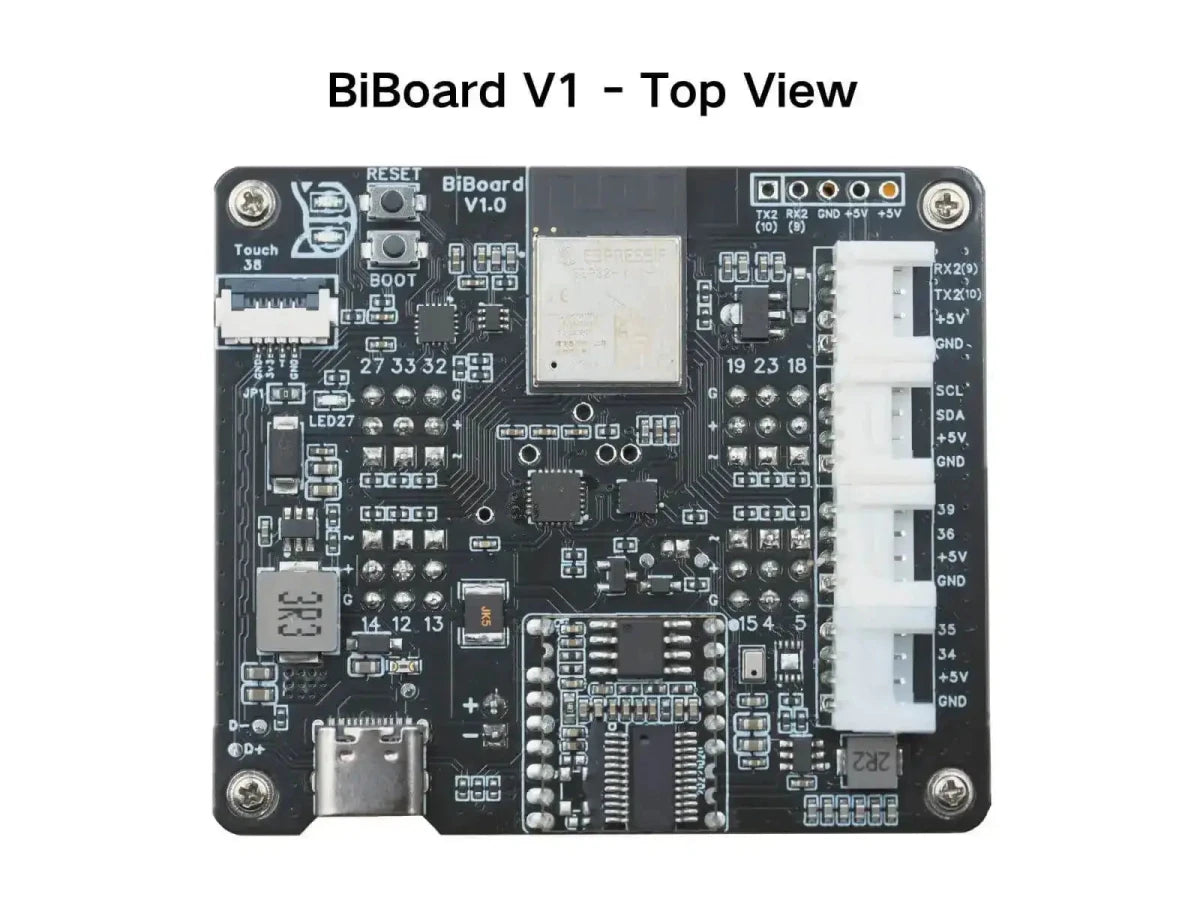
BiBoard is an ESP32-based robot microcontroller board developed by Petoi. With a high-performance processor, larger memory and storage, and wireless connections, it is mainly designed for developers and engineers working on multi-degree-of-freedom (Multi-joint) robots with up to 12 servos. An audio function is also included.
Features
Drive 12 PWM servos
An IMU (Inertial Measurement Unit) is used for detecting body status (orientation and acceleration) to balance
Infrared remote controller (only on the V0 board)
4 Grove sockets for external modules.
USB Type-C port for uploading firmware and serial communication.
64Kbit I2C EEPROM (optional on the V1 board)
DAC and audio application.
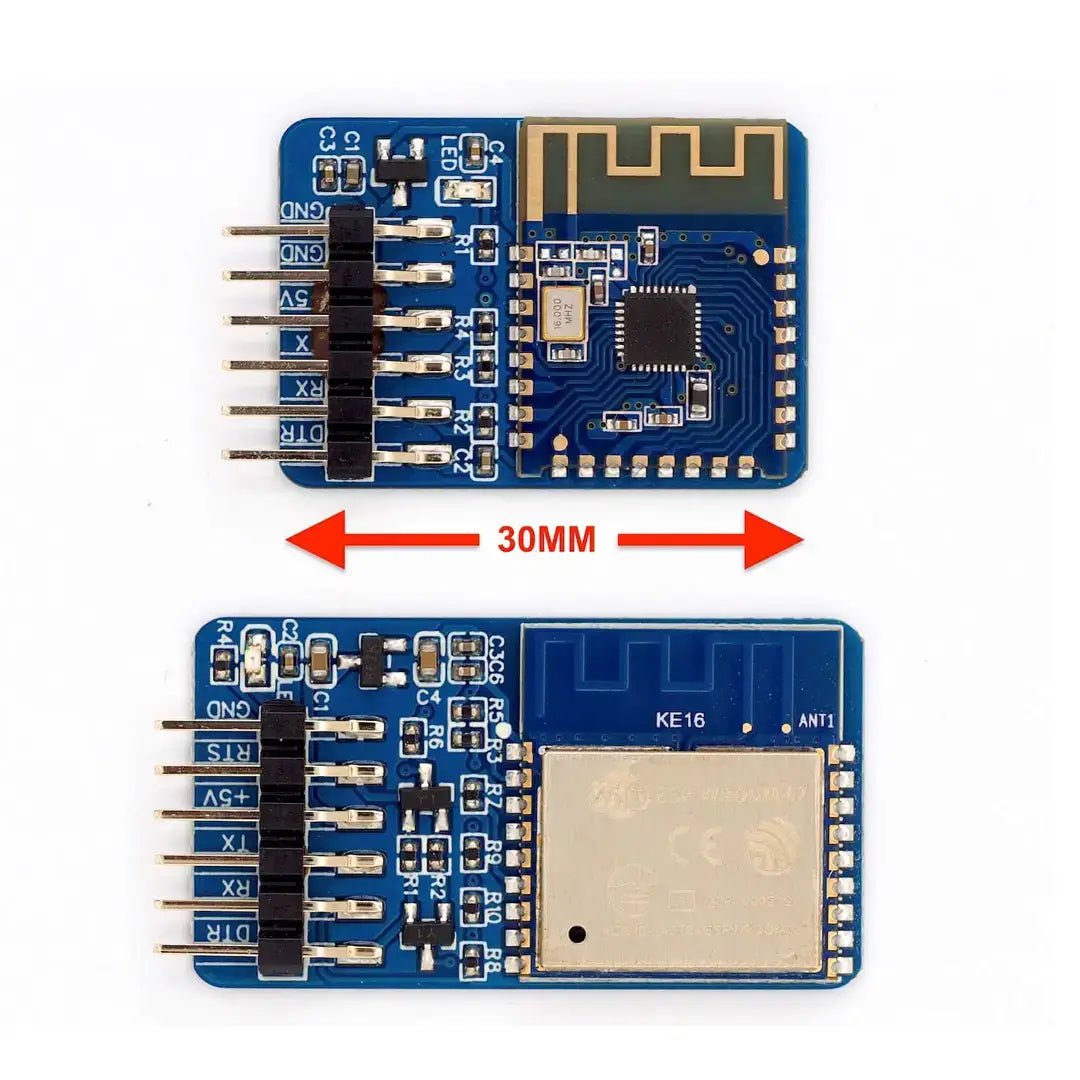
Built-in connectivity support
Serial
Bluetooth
WiFi
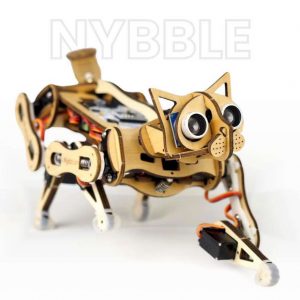
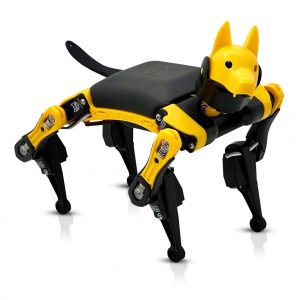
Compatible with Petoi open source quadruped robotics kits, such as robot dog Bittle X and robot cat Nybble Q
Raspberry Pi support
The V1 board provides a 5-pin socket for mounting Raspberry Pi directly.
For the V0 board, you must use wires or adapters to mount the Raspberry Pi on the BiBoard. The Pi allows robotics kits such as Bittle to analyze more complex sensory data, connect to the Internet, and make decisions by itself.
The source code is open-source on GitHub and has a detailed user manual .
Example application
Petoi’s bionic robot dog Bittle fully utilized BiBoard to coordinate 8 degree-of-freedom(DOF) sophisticated motions.
Bittle walks over an 8.5cm(3.35 inch) gap. More details from the tutorial .
Specifications
Features
BiBoard V0
BiBoard V1
Structure
Stacked
Single board
Size
65mm x 56mm x 18 mm
65mm x 56mm x 15mm
CPU
16MB ESP32
4MB ESP32 mini
PWM servo sockets
12x PWM. Pin 2 cannot read feedback
12x PWM. pin 27 shared with LED
Working voltage
USB or 7.4V battery
IMU (Inertia Measurement Unit)
MPU6050
Default: ICM42670 Optional: MP
 Deutsch
 English
 Español
 Français
 Português
 Русский
 العربية
 中文
中文 日本語
日本語 한국어
한국어
Reviews
There are no reviews yet.